Unlocking the Secrets of Sterkfontein Caves: What to Expect
There is a specific quality to the early morning light over the Witwatersberg ridges. When I drive my bakkie—that trusty South African pickup truck—along Kromdraai Road toward the valley, the golden grass glows in a way that feels remarkably untamed. It reminds me of the quieter corners of the Sussex downs where I grew up, except that beneath this tranquil Gauteng veld lies a dark, limestone labyrinth that holds the story of how our distant ancestors first stood upright on two legs.
The Wits Sterkfontein Caves, managed under the stewardship of the University of the Witwatersrand, are among the world’s premier paleoanthropological locations. For anyone interested in deep time, stepping inside these damp dolomitic caverns is not just a sightseeing stop. It is a direct encounter with the damp earth where our origins were pieced together. Before descending into the dark, it pays to understand what awaits beneath the surface, how the site operates, and how to structure your day for a proper journey into humanity’s past.
Practical Logistics: Hours, Pricing, and Bookings
Planning a trip out from Johannesburg or Pretoria requires minimal preparation, but paying attention to entry schedules is essential. The Sterkfontein site operates from Tuesday to Sunday, opening at 09:00 and closing at 16:00. Note that the site is closed every Monday. Guided cavern tours run hourly on the hour, with the final group entering the underground system at 16:00 sharp. Each guided tour lasts between 60 and 90 minutes and is capped at a maximum of 30 people per slot to prevent overcrowding in the narrow passages.
Tickets can be purchased online through Webtickets or directly at the ticket window upon arrival. Securing your entry online beforehand is advisable during weekends and South African school holidays, as group capacities fill quickly. You can review detailed ticket options on our tickets and tours page or refer to the breakdown below.
| Ticket Category | Tariff (ZAR) | Inclusions & Requirements |
|---|---|---|
| Adults | R150 | Full admission to Exhibition and Guided Cave Tour |
| Children (6 – 18 years) | R125 | Full admission (Must be accompanied by an adult) |
| Children under 6 years | Free | Maximum 2 children per paying adult |
| Pensioners | R100 | Proof of valid ID required at check-in |
| Exhibition & Prep Lab Only | R80 | Access to ground-level displays only (no caves) |
| Birthday Discount | Free | Valid on exact date of birth with official ID |
Getting Your Bearings: The Interpretive Centre
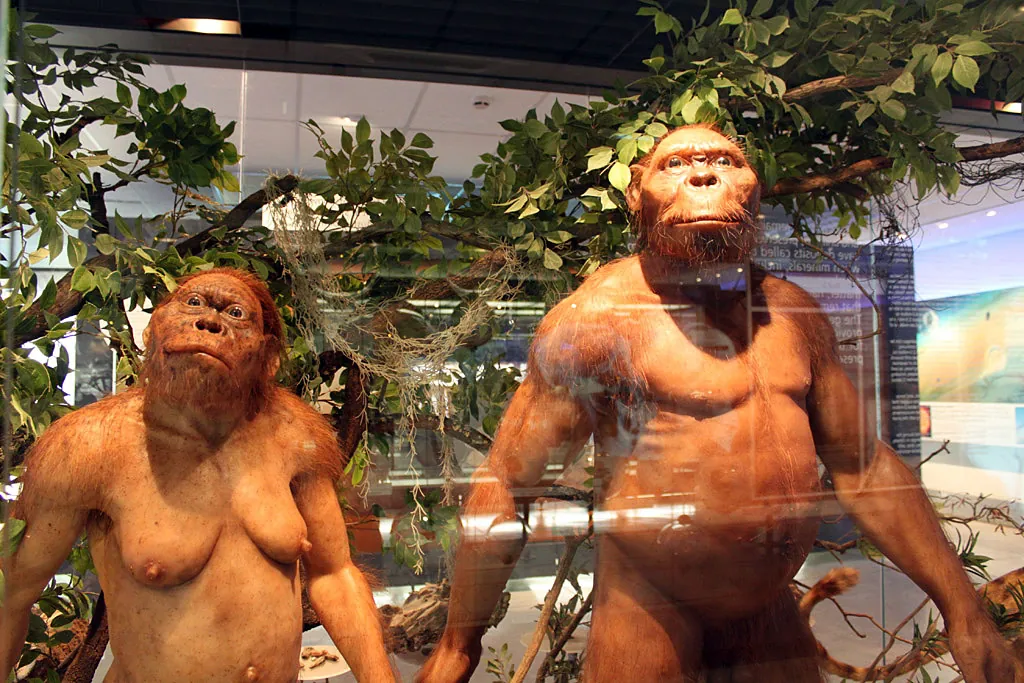
Before you step into the dark, your tour begins at the initial visiter hub and museum exhibition hall on the surface. This space provides vital background context for the geological formation of the dolomitic rock systems and the timeline of hominin evolution in Southern Africa. Interactive models, fossil casts, and informative panels outline how rainfall dissolving calcium carbonate formed giant subterranean voids over millions of years.
The display also explains how early hominins and animal prey tumbled through sinkholes into these underground traps. Over millions of years, bones and sediment solidified into a rock-like deposit called breccia. Walking through the exhibition takes roughly 20 to 30 minutes, giving you a firm foundation before your guide gathers the group at the cave entrance point.
Crossing the Threshold: Into the Caverns
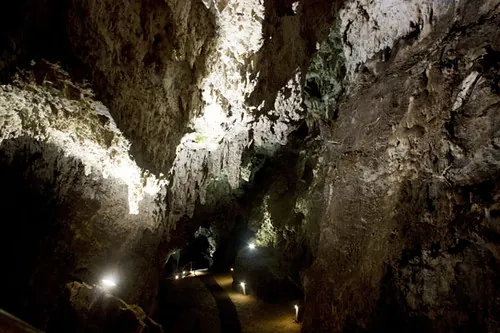
Leaving the brilliant sunlight of the Gauteng veld behind, you follow your guide down a structured pathway towards the primary cavern mouth. The transition from daylight into subterranean shadow is immediate. Air temperatures drop to a cool, constant 18°C (64°F), and the smell of damp stone and earth fills the air as you begin descending into teh cool depths.
The entry route features a series of concrete stairs, metal walkways, and handrails. Electric lighting illuminates the main pathways, casting long shadows across massive stalactites and flowstone formations hanging from the vaulted ceilings. Your guide pauses at several wide landing points to point out natural limestone formations, deep shafts, and ancient calcified animal bones embedded directly into the rock walls around you.
Physical Demands and Accessibility Realities
It is vital to set realistic physical expectations before descending. The subterranean route requires negotiating over 200 stairs, steep incline pathways, and uneven rock steps. At certain points, low-hanging limestone ledges force visitors to crouch down low to squeeze through narrow rock gaps.
Due to these natural terrain barriers, the underground caves are not wheelchair accessible. Visitors with severe claustrophobia, acute respiratory conditions, or joint mobility challenges may find the route uncomfortable. For detailed safety regulations and physical accessibility guidelines, consult our visitor guidelines guide before scheduling your journey.
Footwear and Wardrobe Essentials: What to Wear to Sterkfontein Caves
When deciding what to wear to Sterkfontein Caves, practical outdoor gear is essential. Underground rock surfaces are damp, slick, and uneven due to natural groundwater seepage. Smooth-soled dress shoes, high heels, or open sandals are strictly unsuitable and pose a slipping hazard on the wet concrete steps.
Wear sturdy, closed-toe walking shoes or trainers with deep rubber treads. Long trousers made from flexible cotton or outdoor fabric are recommended to protect your knees and shins when bending under low rock ledges. Because the underground atmosphere stays persistently cool year-round, bringing a lightweight jacket, fleece, or windbreaker ensures comfortable exploration during the hour-long underground walk.
Local Tip: Keep your hands free while walking down the stairways. Avoid carrying bulky backpacks or large handbags, as squeezing through tight rock gaps is far easier when your arms can swing freely to balance on handrails.
The Science in Action: Historic Excavation Sites
As you progress deeper into the complex, the pathway leads past active and historical excavation pits. Many visitors arrive asking what was found at Sterkfontein Cave to give it such international prominence in paleoanthropology. The short answer is extraordinary: the caves have yielded over 700 individual hominid fossil specimens, making this single cavern system the world’s richest source of early human ancestors.
Beyond human ancestor remains, paleontologists have retrieved thousands of fossilized animal bones including extinct sabre-toothed cats, baboons, and wild dogs, alongside primitive stone tools belonging to early stone tool technologies. These discoveries have allowed scientists to reconstruct the ancient landscape and climate of Gauteng over a timeline spanning three million years. You can consult research updates directly on the official Wits Sterkfontein Caves portal.
Echoes of Discovery: Mrs. Ples and Little Foot
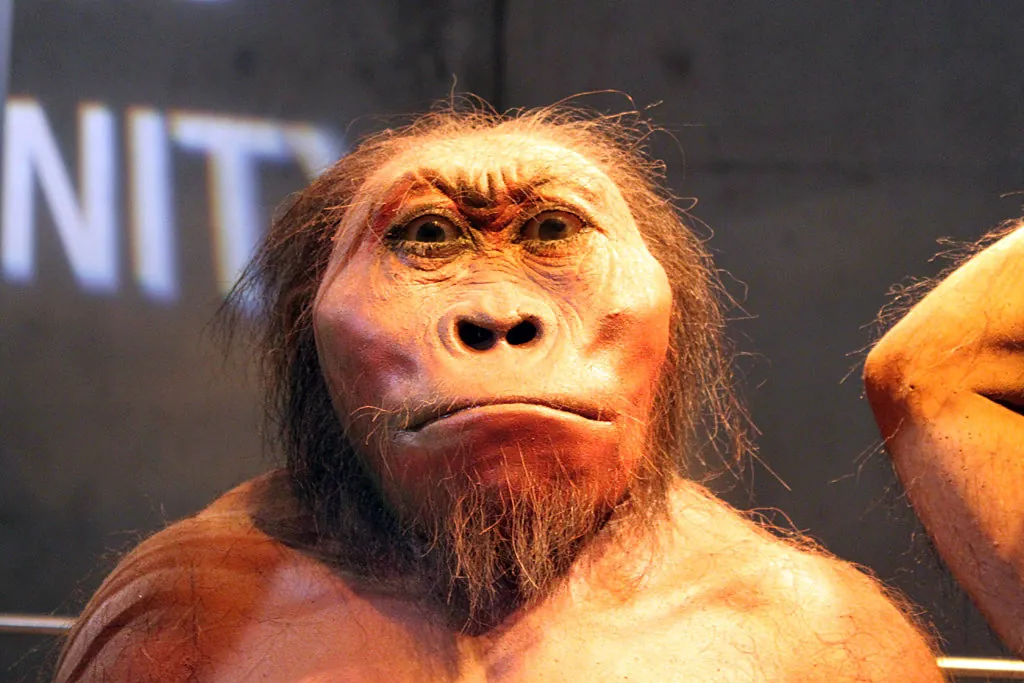
Two specific fossil discoveries stand out in the history of science. The first is “Mrs. Ples,” an extraordinarily intact skull of Australopithecus africanus discovered by Dr. Robert Broom and John Robinson in 1936. Estimated to be roughly 2.05 million years old, Mrs. Ples provided decisive evidence that human ancestors evolved on the African continent, fulfilling Charles Darwin’s early predictions.
The second monumental discovery is “Little Foot,” an almost complete Australopithecus skeleton excavated by Professor Ron Clarke and his team. If you wonder whether there is a skeleton older than Lucy, Little Foot is the answer. Dated to approximately 3.67 million years old, Little Foot is older and far more complete than Ethiopia’s famous Lucy fossil, offering unprecedented insights into early bipedal locomotion and skeletal anatomy.
Underground Highlights: Silberberg Grotto and Lake
The climax of the underground route brings you to the edge of the Silberberg Grotto. This cavern chamber is the exact subterranean space where Little Foot lay encased in hard breccia for over three million years, a site where researchers spent decades working in.
Adjacent to the grotto lies a calm subterranean lake located nearly 40 metres below surface level. The crystal-clear water remains perpetually still, reflecting the illuminated cave walls above. The lake is a natural reservoir feeding into the surrounding limestone water table, creating an atmosphere of deep silence that contrasts sharply with the world outside.
Safety Protocols and Group Guidelines
Protecting both visitors and the fragile cave environment requires strict adherence to site rules. All visitors must remain with their assigned guide throughout the tour. Straying off marked pathways is strictly prohibited due to steep vertical shafts and active scientific research zones that sit just beyond visitor barrier lines.
Touching stalactites, stalagmites, or flowstones is not permitted, as oils from human skin stop the growth of natural crystal formations. Smoking, eating, and drinking (except for bottled water) inside the cave system are forbidden. Photography is welcomed, but flash illumination should be used mindfully so as not to disorient fellow group members on dark staircases.
Rounding Off the Day: Connecting with Maropeng
A visit to Sterkfontein represents only half of the story. To complete your experience of the Cradle of Humankind UNESCO World Heritage Site, drive ten kilometers down the road to the Maropeng Visitor Centre. While Sterkfontein is the active physical site where fossils are extracted from stone, Maropeng has a world-class exhibition building shaped like an ancient burial mound.
If you wonder how long the Cradle of Humankind takes, setting aside a full day allows you to comfortably explore both locations, enjoy lunch at a local restaurant, and take in the rolling views of the Magaliesberg mountains. Discover more about planning your full route by reading our comprehensive Maropeng exhibition guide or check out overall regional advice in our Gauteng travel tips for first-timers.