Driving out from Johannesburg toward the vast grasslands of Gauteng, the suburban sprawl gives way to quiet limestone ridges and open sky. This broad expanse of highveld grass and acacia thorn covers more than 47,000 hectares, forming a landscape I am deeply attached to. Beneath this peaceful terrain lies one of the most astonishing evolutionary repositories on Earth. The cradle of humankind history spans millions of years, recorded in deep subterranean caverns where early hominids walked, fell, and left their bones to fossilize in stone.
Geological Genesis of the Subterranean Vaults
The foundation of this ancient landscape rests on Malmani Dolomite, a marine rock formed roughly 2.3 to 2.5 billion years ago when an ocean covered this portion of southern Africa. Over geological epochs, rainy water mixed with acidic soil carbon dioxide, seeping into subterranean fractures and dissolving calcium carbonate. This slow underground decay carved extensive cave networks into the bedrock. Surface erosion eventually punctured these chambers, creating vertical shaft openings across the highveld surface.
Taphonomy and Natural Pit Traps
These concealed openings acted as deadly natural pit traps for animals roaming the grassland above. Early hominids, sabre-toothed felids, and prehistoric antelopes tumbled into shafts or were dragged inside by predators like leopards. Over generations, heavy seasonal rains washed soil, gravel, and organic remains into subterranean piles. Dissolved calcium carbonate cemented these debris piles into breccia, a concrete-like matrix that preserved skeleton structures against surface decay for millions of years.
Precision Dating Challenges
Dating cave deposits in South Africa presents a dificult challenge because volcanic ash layers, common in East Africa’s Rift Valley, are absent here. Instead, scientists measure uranium-lead isotopes within flowstone layers surrounding fossiliferous breccia. Researchers also deploy cosmogenic nuclide dating, which calculates how long surface quartz grains were bombarded by cosmic rays before sliding into underground darkness, establishing precise chronologies for deep fossil strata.
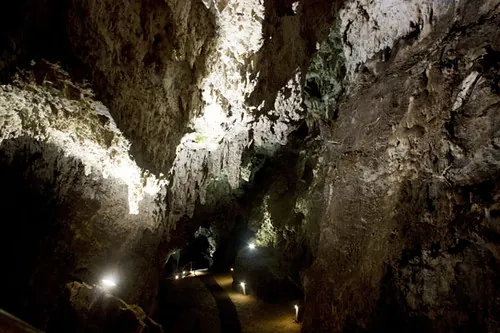
What Was Found at Sterkfontein Cave?
Among the dozens of excavation sites scattered across the valley, Sterkfontein Caves holds an unmatched position in early human research. Active scientific work began in the 1930s when quarry miners exposed fossiliferous breccia during routine lime extraction. Robert Broom and Raymond Dart recognized the significance of these finds, initiating systematic excavations under the auspices of the University of the Witwatersrand. Since those early days, Sterkfontein alone has yielded more than a third of all early hominid fossils discovered globally.
Extracting delicate bone fragments from hardened dolomite breccia requires incredible patience. Fieldworkers spend months using air-scribes to free millimeter-thick skull pieces without causing damage.
Sterkfontein Research Excavator
The cave system has produced hundreds of individual specimens belonging to early ancestors, alongside thousands of animal fossils, crude stone implements, and ancient plant material. These discoveries provided concrete evidence that bipedal hominids flourished across southern Africa long before modern humans emerged.
Mrs. Ples and Little Foot: Re-writing the Human Family Tree
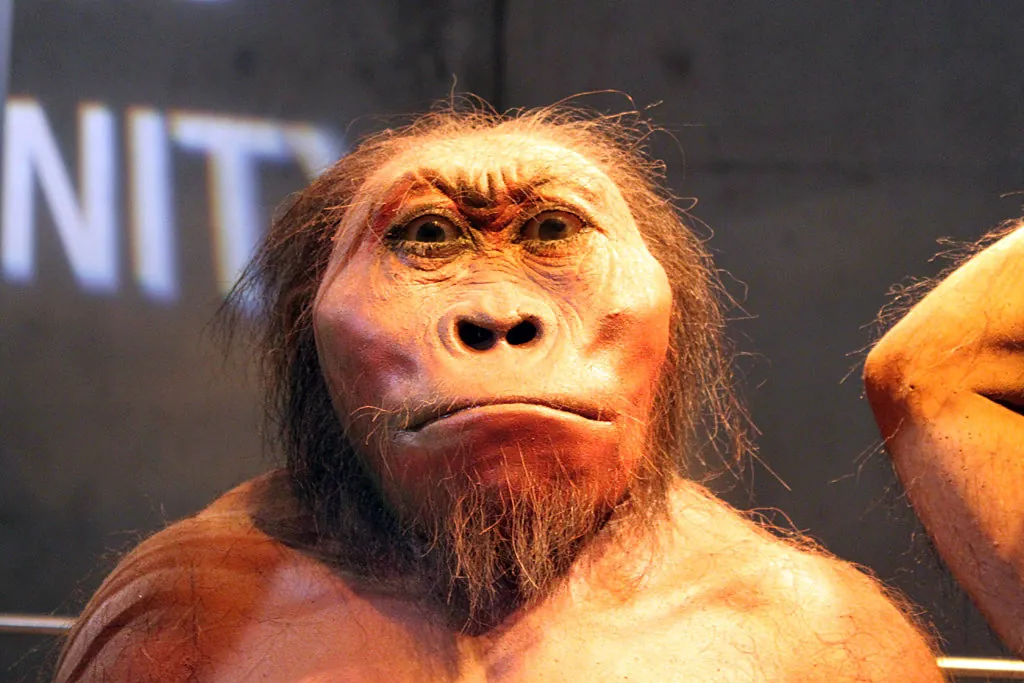
In April 1947, Robert Broom and John Robinson uncovered an exceptionally complete adult skull catalogued as Sts 5, popularly known as Mrs. Ples. Dated to roughly 2.1 to 2.5 million years ago, this Australopithecus africanus cranium possessed a small braincase alongside clear indications of habitual two-legged walking. The discovery confirmed that early human ancestors walked upright well before developing large cranial capacities.
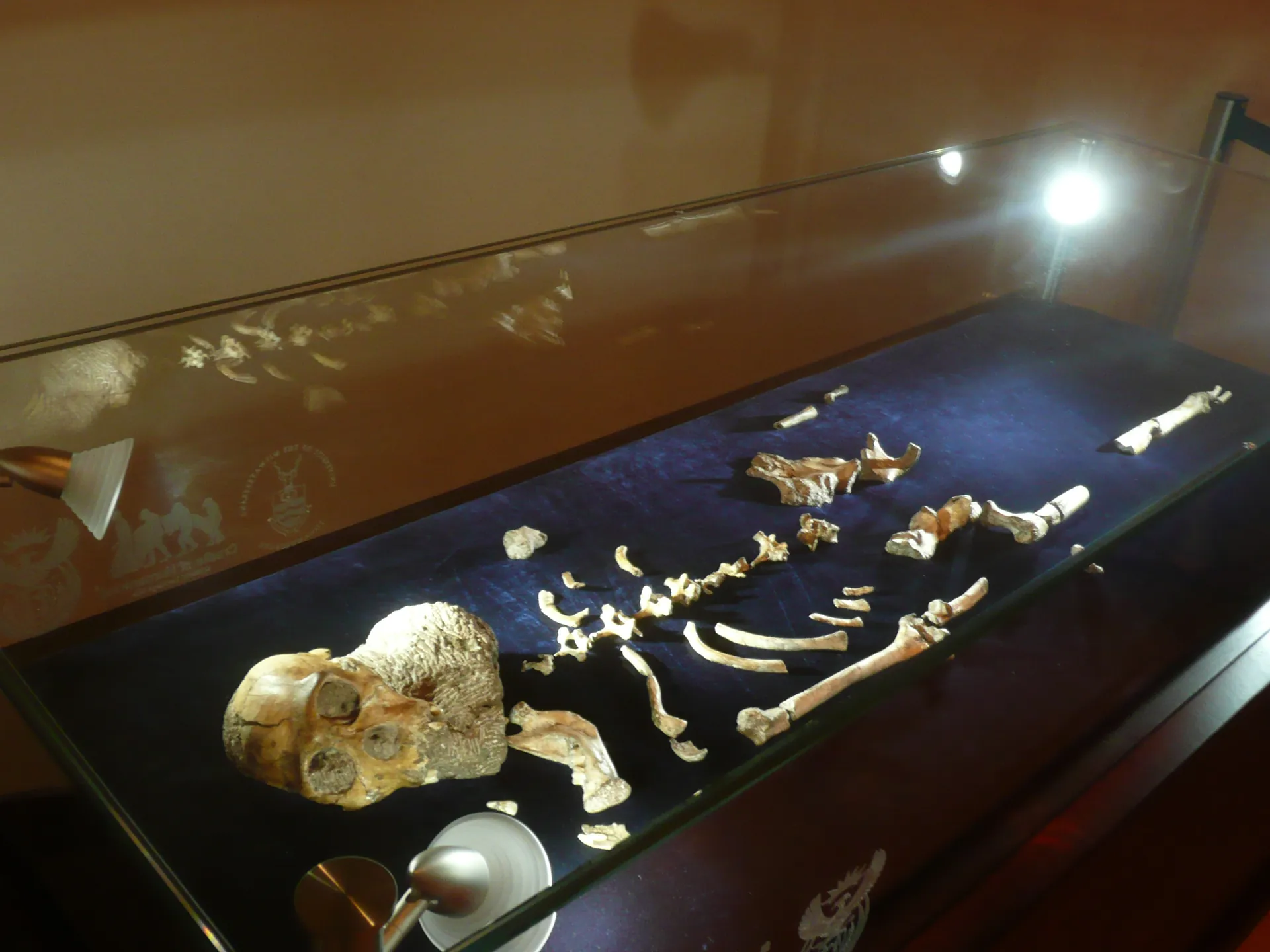
Decades later, paleoanthropologist Ronald Clarke identified four small hominid foot bones in storage boxes from Sterkfontein’s Silberberg Grotto. Sending assistants Stephen Motsumi and Nkwane Molefe back into the pitch-black cave with plaster casts, they located the matching exposed leg bones embedded in the deep rock wall in 1997. The resulting recovery of StW 573, nicknamed Little Foot, took over twenty years of meticulous underground excavation. Classified as Australopithecus prometheus, this complete skeleton dates back 3.67 million years.
Travelers often ask if there is a skeleton older than Lucy, the famous 3.2-million-year-old Australopithecus afarensis found in Ethiopia. Little Foot is significantly older than Lucy, providing scientists with an unbroken look at full limb proportions, hand agility, and tree-climbing adaptations that existed simultaneously in early hominid lines.
Beyond Sterkfontein: Fire, Tools, and Mortuary Practices
Fossil discovery in the valley extends far beyond a single cavern site. Across the valley at Swartkrans, researchers uncovered deposits revealing the co-existence of two distinct hominid species: the robust-jawed Paranthropus robustus and early members of our own genus, Homo. Swartkrans provided early evidence of controlled fire use in southern Africa, where burned animal bones show sustained temperatures consistent with hearths rather than wildfires. Simple stone flakes and bone tools used for digging termite mounds demonstrate early technological adaptability.
Further west, the Rising Star Cave system sparked international interest in 2015 when Lee Berger and his team announced the discovery of Homo naledi inside the remote Dinaledi Chamber. Requiring caving specialists to squeeze through narrow fissures measuring barely 20 centimeters wide, researchers recovered over 1,500 individual bone elements. The presence of so many intact skeletons in a secluded underground chamber led researchers to hypothesize that these small-brained hominids intentionally deposited their dead in pitch-dark underground spaces.
Nearby at Drimolen, ongoing excavations continuously yield important finds, including a 2-million-year-old Homo erectus skull specimen that represents the oldest known individual of that species anywhere on the planet.
The sheer density of fossil material inside these dolomite hills means that every new excavation trench has teh potential to completely alter our understanding of human ancestry.
Why Is It Called the Cradle of Humankind
The region received its designation because its cave deposits contain one of the world’s richest concentrations of early human fossils. The name reflects South Africa’s central role in demonstrating that human ancestors originated and evolved on the African continent. In 1999, UNESCO declared the 47,000-hectare area a World Heritage Site to protect these irreplaceable paleoanthropological deposits.
Visitors frequently wonder about the difference between Maropeng and the Cradle of Humankind. The Cradle of Humankind refers to the entire geographic region spanning Gauteng and North West provinces. Maropeng is the official visitor centre, an award-winning exhibition space housed inside an artificial burial mound called a tumulus, designed to explain these complex scientific discoveries to the public.
| Excavation Site | Primary Species Found | Approximate Age | Key Scientific Insight |
|---|---|---|---|
| Sterkfontein Caves | Australopithecus africanus, A. prometheus | 2.0 to 3.67 Million Years | Yielded Mrs. Ples and Little Foot, proving early bipedalism. |
| Swartkrans | Paranthropus robustus, Early Homo | 1.0 to 1.8 Million Years | Earliest evidence of controlled fire and tool overlap. |
| Rising Star Cave | Homo naledi | 236,000 to 335,000 Years | Evidence pointing toward primitive deliberate body disposal. |
| Drimolen | Paranthropus robustus, Homo erectus | 1.5 to 2.0 Million Years | Oldest verified Homo erectus specimen globally. |
Connecting History to a Modern Visit
Standing above an active excavation site gives a rare perspective on human existence. To appreciate the magnitude of these discoveries, pair an underground cavern trip with an interactive walkthrough at the Maropeng Official Site exhibit center. You can read my detailed walkthrough in the Maropeng Visitor Centre experience post, or plan your cavern exploration using our guide to exploring Sterkfontein Caves.
Before heading out into the veld, review practical advice on how to get to the Cradle of Humankind from Johannesburg or Pretoria. Be sure to check the visitor rules and safety guidelines, especially regarding proper footwear for slick underground steps. For those staying overnight in countryside guesthouses, consult our curated dining and accommodation guide, or browse entry details on our tickets and tours page to reserve your guided excursion ahead of time.