The Science of Fossils: Understanding Hominid Discoveries
Subterranean Vaults of Deep Time: The Science of Cradle Fossils
Every morning when I start the engine of my battered bakkie (the classic South African light utility truck) and head northwest out of Johannesburg, the early light across the Highveld grass feels unchanged from millennia ago. The limestone rolling hills, lying under forty kilometres from the suburban rim of Joburg and Pretoria, hold a secret trapped in dolomitic rock. When examining cradle of humankind history, the region’s subterranean cave systems reveal how tiny fragments of bone, mineralised over millions of years, fundamentally altered our understanding of human origin.
In the early twentieth century, commercial lime miners used dynamite to blast through ancient rock deposits to supply Gauteng’s gold processing plants. They inadvertently cracked open fossilised cave fill known as breccia. These breccia deposits formed as sediment, bones, and debris washed into underground sinkholes over millions of years, setting into concrete-hard stone. What began as an industrial mining byproduct became the world’s most productive paleoanthropological laboratory. Recognized formally by the UNESCO World Heritage Centre, this rolling countryside has yielded a massive percentage of the entire world’s hominid fossil record.
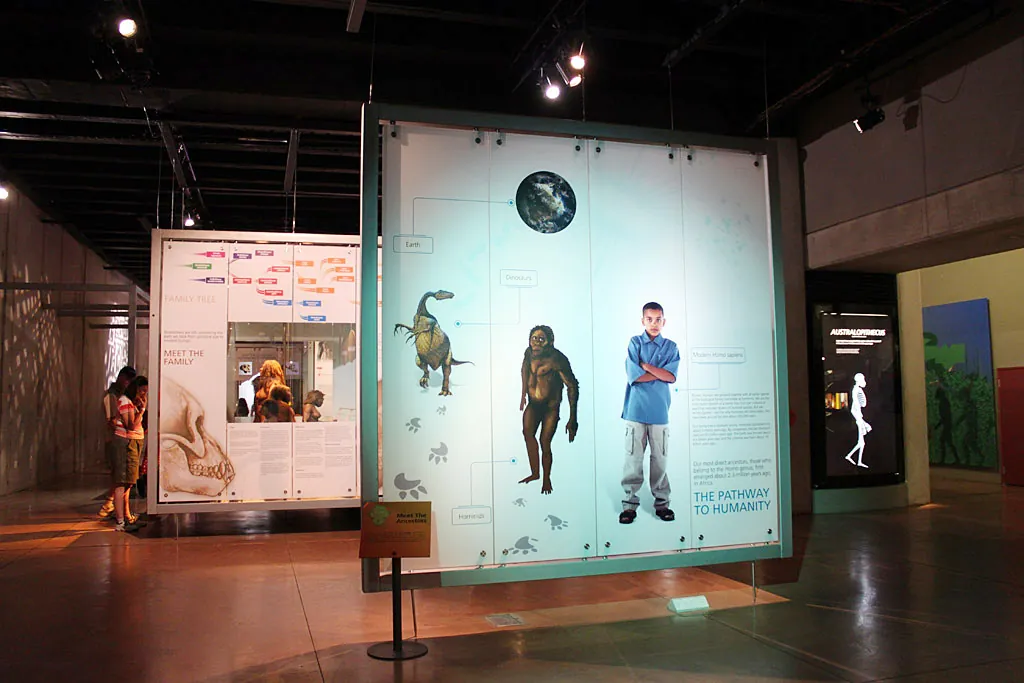
From Taung to Mrs. Ples: Early Australopithecus Breakthroughs
In late 1924, lime miners at Taung in the North West province sent a wooden box of fossilised rock to Raymond Dart, an Australian-born anatomy professor at the University of the Witwatersrand in Johannesburg. Among the fragments, Dart isolated the fossil skull of a juvenile primate with an endocast of its brain. Published in early 1925, Dart named the specimen Australopithecus africanus (“southern ape of Africa”). He asserted that its forward-placed foramen magnum, the opening at the base of the skull where the spinal cord attaches, proved upright bipedal walking despite a brain size comparable to a chimpanzee.
Dart’s claims met initial skepticism in Europe, where mainstream science favored large-brained European hominid theories. Decades later, Scottish physician and paleontologist Robert Broom joined the hunt at Sterkfontein Caves near Krugersdorp. On April 18, 1947, Broom and his assistant John T. Robinson blasted a section of Member 4 breccia and recovered catalog specimen STS 5, affectionately nicknamed “Mrs. Ples.” Originally classified as Plesianthropus transvaalensis, this adult skull possessed a cranial capacity of roughly 485 cubic centimetres. Mrs. Ples offered indisputable evidence that upright walking preceded significant brain expansion in hominid evolution, proving Dart correct.
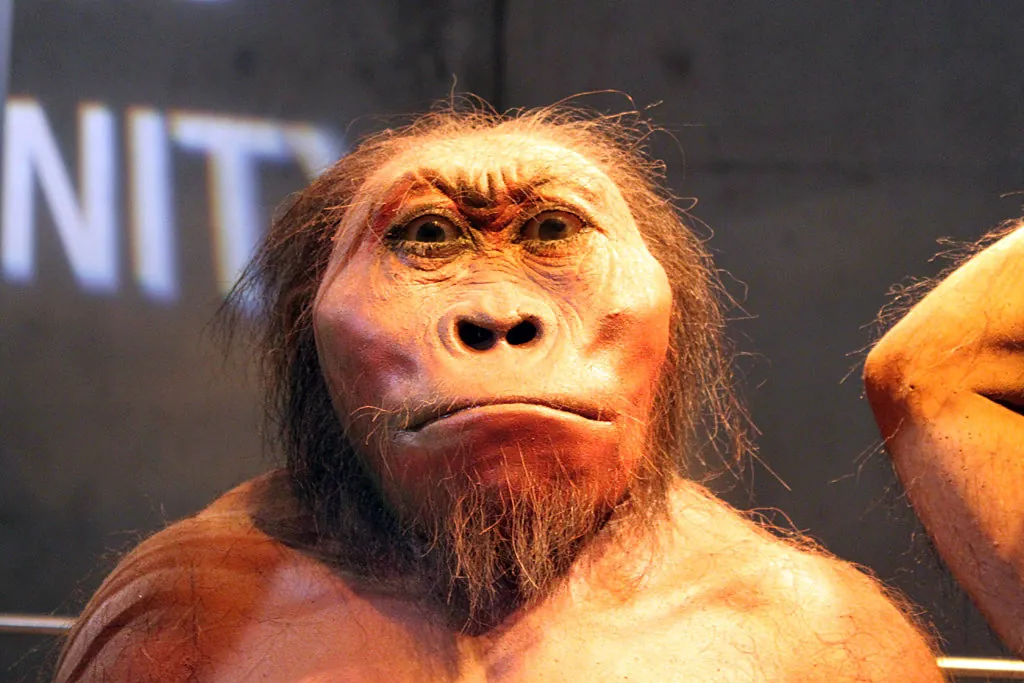
ProTip: Many of South Africa’s premier primary fossil originals, including the skull of Mrs. Ples, reside at the Ditsong National Museum of Natural History in Pretoria, while active preparation works continue at Wits University.
Little Foot and the Age of Australopithecus
Travelers often ask, is there a skeleton older than Lucy? The answer lies in Sterkfontein’s deep subterranean chambers with Little Foot, dated to approximately 3.6 million years ago. While East Africa’s famous “Lucy” (Australopithecus afarensis) discovered in Ethiopia dates to roughly 3.2 million years old, Little Foot (cataloged as StW 573) is significantly older and vastly more complete.
The story of Little Foot is a proper testament to scientific patience. In 1994, Professor Ron Clarke was sorting through bagged animal bones in a storage room at Wits University when he identified four ankle and foot bones that belonged to an early hominid. Clarke dispatched cave assistants Stephen Motsumi and Nkwane Molefe into teh Silberberg Grotto deep inside Sterkfontein Caves with a plaster cast of the broken bone edge. Using handheld lamps in total darkness, they located the matching bone shaft sticking out of the solid cave wall in 1997.
Excavating Little Foot required more than twenty years of painstaking work using air scribes (fine pneumatic needles) to chip away solid dolomitic rock without fracturing fragile bone. The result is an astonishingly complete skeleton of Australopithecus prometheus, preserving over 90 percent of its frame, including delicate hand bones and an intact spine. Little Foot proves that multiple species of Australopithecus roamed southern Africa simultaneously, possessing divergent climbing and walking adaptations.
The Rising Star Expedition and Homo naledi
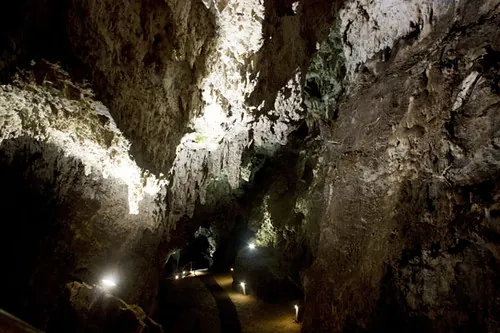
In 2013, local cavers Rick Hunter and Steven Tucker squeezed through a narrow vertical chute in the Rising Star Cave system, landing in a completely isolated subterranean room called the Dinaledi Chamber. The floor was strewn with thousands of bones. Upon reviewing photographs, Wits paleontologist Lee Berger organized an international team of slender subterranean archaeologists to descend through a chute measuring barely eighteen centimetres wide.
The expedition recovered over 1,550 fossil specimens representing at least 15 individuals, including an exceptionally well-preserved partial adult male skeleton nicknamed “Neo” from the nearby Lesedi Chamber. The newly identified species, Homo naledi, presents an extraordinary evolutionary mosaic. Their brain size was small, ranging from 465 to 610 cubic centimetres, yet their wrists, hands, and feet were almost indistinguishable from modern humans. Their shoulder anatomy and curved fingers indicate tree-climbing ability, while long lower limbs suited efficient distance walking.
Rewriting Timelines and Behavior Patterns
Initial physical assessments suggested Homo naledi lived two million years ago due to its tiny brain size. However, optically stimulated luminescence and uranium-series dating established that the fossils are surprisingly young, dating between 335,000 and 236,000 years old. This means Homo naledi inhabited the Highveld at the same time early ancestors of modern Homo sapiens were emerging across Africa.
The placement of hundreds of bones inside pitch-black chambers with no animal bite marks or geological wash indicators led researchers to propose a controversial hypothesis: intentional disposal of the dead. If true, a small-brained hominid species engaged in symbolic, complex mortuary practices once thought exclusive to large-brained humans. Ongoing excavations inside Rising Star continue to test these hypotheses, reshaping debates on human cognitive evolution.
Dating the Dolomite: How Science Ages Breccia
Determining the age of fossils in South African limestone caves has historically proved more difficult than in East Africa, where volcanic ash layers allow straightforward argon-argon dating. Cradle fossils sit sealed in complex flowstones and calcified breccia matrices.
- Cosmogenic Nuclide Dating: Measures rare isotopes like aluminum-26 and beryllium-10 produced by cosmic rays hitting quartz grains before burial, revealing when sediment entered cave shafts.
- Uranium-Lead (U-Pb) Dating: Analyzes radioactive decay in speleothems (stalagmites and flowstones) locking in time horizons above and below fossil deposits.
- Electron Spin Resonance (ESR): Traps radiation doses in fossil tooth enamel to determine precise burial spans.
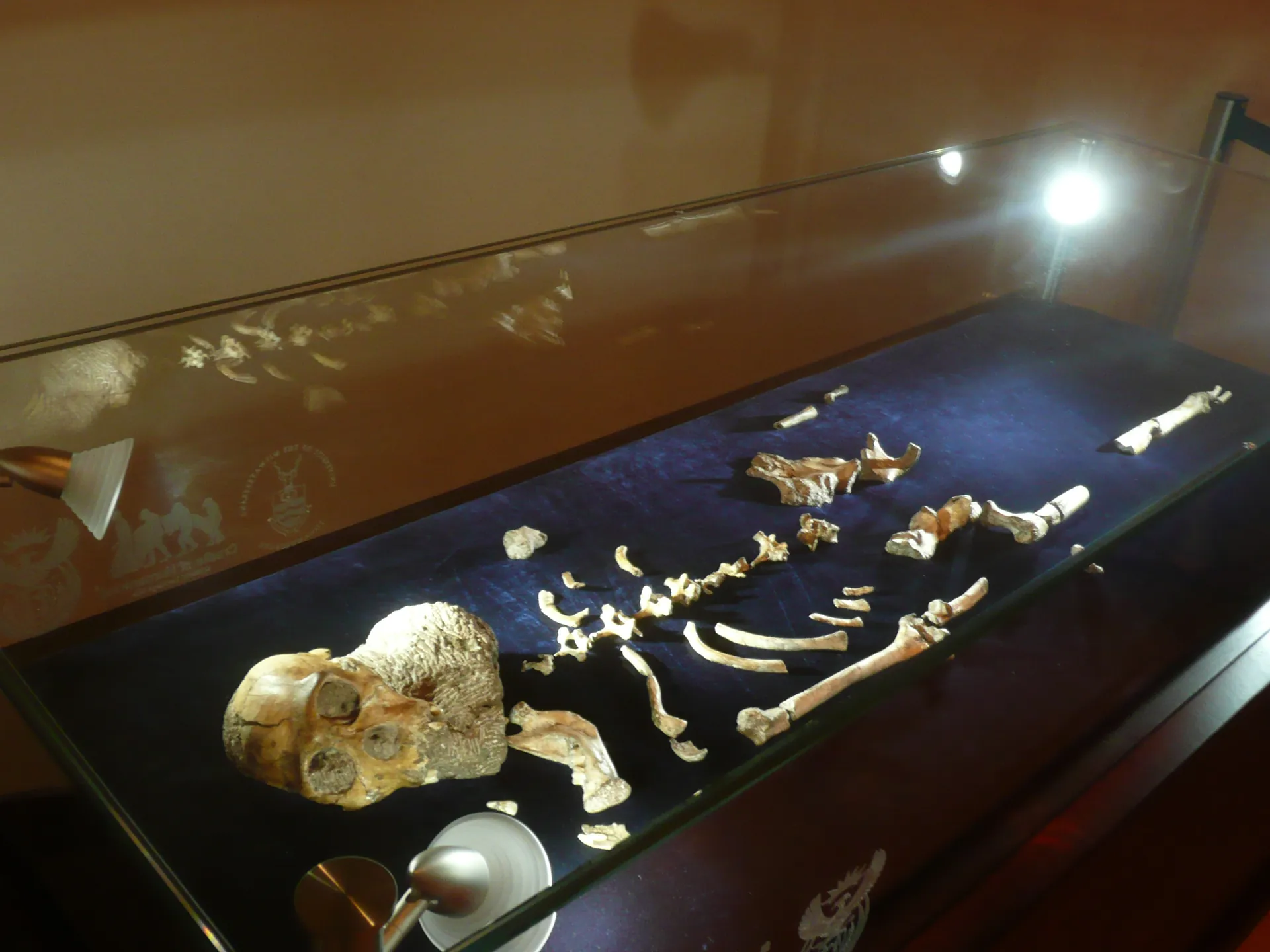
Modern radiometric and cosmogenic dating methods have pushed back Sterkfontein’s Member 4 deposits to over three million years, confirming South Africa as a principal crucible of early human diversity.
Visiting the Scientific Frontier: Practical Traveler Advice
Experiencing these scientific discoveries in person requires balancing museum visits with field excavation sites. The visitor journey splits logically between two main locations across the heritage area: the Maropeng Visitor Centre and the Sterkfontein Caves complex.
If you wish to explore the history in depth, start your journey at Maropeng’s underground interactive displays to understand continental drift, fossil formation, and human lineage evolution. Afterward, head over to the Sterkfontein Caves walkthrough to stand at the actual site where Mrs. Ples and Little Foot were extracted from the subterranean rock face. Reviewing our deep historical guide will give you context on the researchers who spent decades underground. For smooth trip planning, check out how to reach the Cradle from Johannesburg or compare option packages on our tickets page.
Travelers booking local excursions often combine visits to active excavations with surrounding wildlife reserves or cultural sites. Popular options include a Private Lesedi and Cradle Tour or a dedicated Maropeng & Sterkfontein Day Experience, which cover all local transport and site entry logistics cleanly.
| Key Fossil Discovery | Taxonomic Classification | Estimated Age | Primary Location |
|---|---|---|---|
| Taung Child | Australopithecus africanus | ~2.8 Million Years | Taung Limeworks (Ditsong Museum) |
| Mrs. Ples (STS 5) | Australopithecus africanus | ~2.5 – 3.4 Million Years | Sterkfontein Member 4 |
| Little Foot (StW 573) | Australopithecus prometheus | ~3.6 Million Years | Sterkfontein Silberberg Grotto |
| Homo naledi (Dinaledi) | Homo naledi | 236,000 – 335,000 Years | Rising Star Cave System |
To conclude a day exploring subterranean science, staying overnight nearby makes for a brilliant experience. Consider browsing options on our dining and accommodation directory to spend an evening under the Highveld stars, reflecting on millions of years of human heritage written in the rocks beneath your feet, a landscape worth driving across.